Tokyo Travel Tips for First-Timers: What a Local Host Tells Guests
By Atsushi — host at Bon House in Kanamachi, Katsushika ward. I've run Bon House since 2022 and hosted 300+ guest groups.
Since March 25, 2026, you can tap a credit card at the gates of 11 Tokyo-area rail operators, but JR East and Keisei are not among them, and those are the only two lines at Kanamachi. That is the first of my Tokyo travel tips for first-timers: have a Suica or PASMO before you reach the station.
The rest of this guide is what I go over with guests before their first day out: when to ride, when the last train leaves, how much cash to carry, and how to plan days so you aren't crossing the city three times. Most of it applies anywhere in Tokyo. Some of it matters more when you stay outside the center, as our guests do.
Tokyo Travel Tips for First-Timers at a Glance
| Topic | What to do | Why |
|---|---|---|
| IC card | Suica or PASMO, day 1 | No card tap at JR East or Keisei |
| Morning | Leave after 9:30 | 7:30–9:00 is the crush |
| Night | Check the last train | Service stops around midnight |
| Cash | Carry ¥10,000–20,000 | Small shops take cash only |
| Planning | One area per day | Cross-city trips eat 45+ min |
| Departure tax | ¥3,000, in your fare | Raised on July 1, 2026 |
The departure tax rose from ¥1,000 to ¥3,000 for departures from July 1, 2026. Airlines collect it in the ticket price, so you don't pay anything at the airport. For the wider 2026 cost picture, see Tokyo hotel prices 2026.
Is Staying Outside Central Tokyo a Good Idea for First-Timers?
The first question guests ask me is "Is Kanamachi too far? Should we stay in Shinjuku instead?" My answer: for a stay of four nights or more, a base outside the center works, as long as you plan around the trains.
From Kanamachi, Ueno is 27 minutes and ¥253 with one change at Kita-Senju. Shinjuku is about 45 minutes and Shibuya about 47. Shibamata's temple town is one stop on the Keisei line, 2–3 minutes for ¥146. Tokyo Disneyland is about 45 minutes via Shin-Matsudo, and Narita Airport is 55–70 minutes with one change at Keisei Takasago.
What you get in return is space and quiet. Rooms outside the center cost less than the same size in Shinjuku or Asakusa (the 2026 hotel price guide has the numbers), and the streets go quiet after the last commuters walk home. What you give up is late nights in the center without watching the clock. If nightlife is the point of your trip, stay central.
Bon House is a private tatami room for up to four people inside a detached house, a 7–10 minute walk from Keisei Kanamachi, with its own bathroom, a washer-dryer, Wi-Fi and self check-in. There's no kitchen; the room has a fridge, a microwave and a kettle. If that sounds like the base you want for a first trip, you can check dates and current rates on the Bon House room page.
Get a Suica or PASMO Before Your First Train
Suica (JR East) and PASMO (the private railways and subways) are rechargeable IC cards. Either one works on every train, subway and bus in Tokyo, and in convenience stores and vending machines. There's no practical difference for a visitor.
Regular cards went back on sale in March 2025 after the chip shortage. They take a ¥500 refundable deposit. The Welcome Suica for tourists has no deposit, but it expires after 28 days and any leftover balance isn't refunded. On an iPhone, you can also add Suica to Apple Wallet before you fly and skip the ticket machine entirely.
Load ¥2,000–3,000 to start. From a base outside the center you tap in and out several times a day, and a card with money on it means no queueing at a ticket machine when you're tired. IC fares on JR are charged to the exact yen and come out slightly cheaper than paper tickets.
Tokyo Train Lines Explained for First-Time Visitors
Tokyo's rail map looks impossible until you see it as three kinds of operator:
- JR East (green signage): the big network, including the Yamanote Line loop through Ueno, Tokyo, Shibuya and Shinjuku.
- Tokyo Metro and Toei subways: the lines under central Tokyo, each with its own color and letter.
- Private railways such as Keisei, Tobu and Odakyu, each serving one corridor out of the city.
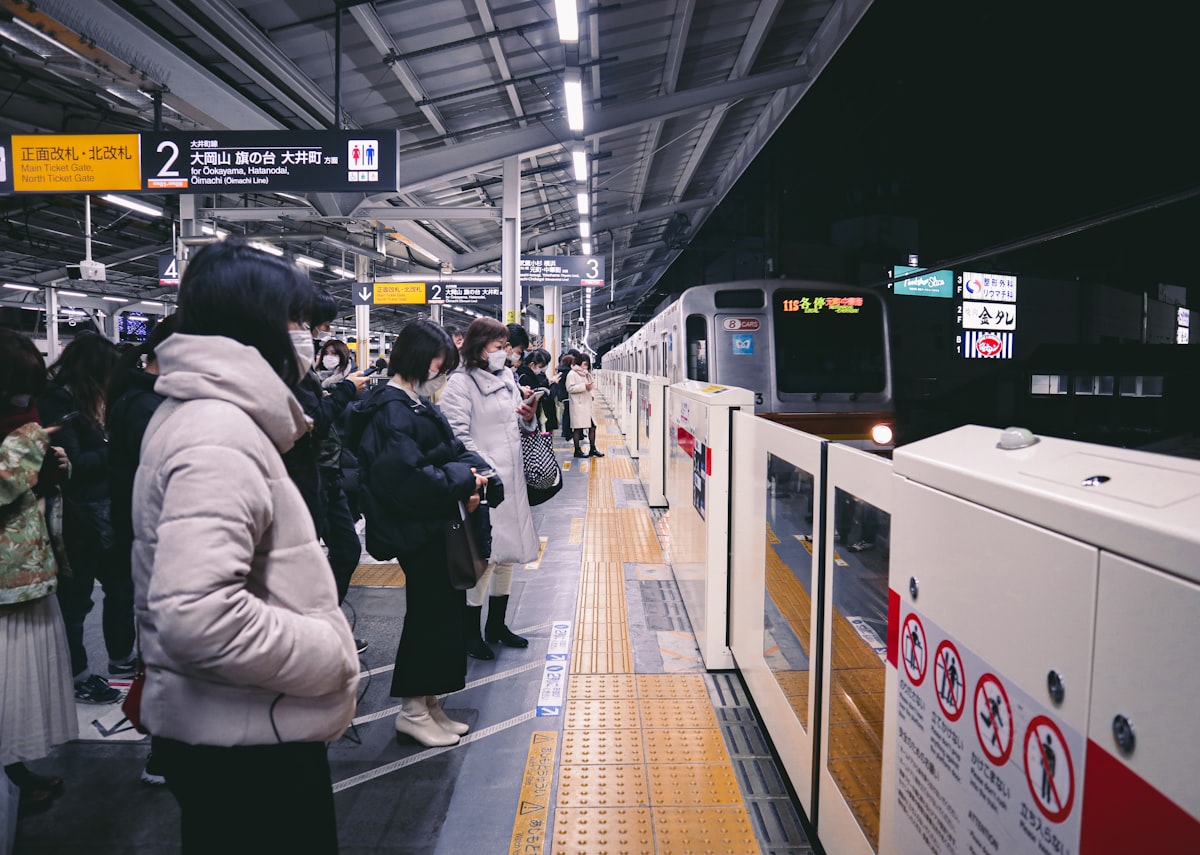
Kanamachi has two stations about 130 m apart. JR Kanamachi is on the Joban Line, and only local trains stop there: rapid trains from Ueno pass straight through, so from central Tokyo you change at Kita-Senju to a local. Many of those locals run through from the Tokyo Metro Chiyoda Line, so Otemachi and Omotesando are on the same train without a change. Keisei Kanamachi is the end of a short branch line to Shibamata and Keisei Takasago, where you change for both airports.
You don't need to memorize any of it. A transit app tells you which car to board and which exit to take. I compare the options in the best Tokyo train apps. Download an offline map of your area too, in case your data runs out.
Last Trains and Rush Hour in Tokyo: Time Your Days
Trains start around 5:00 am and run every few minutes, but they don't run all night. The last trains on most lines leave central Tokyo between 11:30 pm and midnight.
Check the last train before dinner, not after. Set a phone alarm if you lose track of time. Miss it and you either wait for the first train around 5:00 am or take a taxi, which from Shinjuku or Shibuya to Kanamachi can pass ¥10,000 once the 20% late-night surcharge (10 pm to 5 am) applies.
The morning problem is the opposite one. First-timers often head out at 8:00 or 8:30, and the inbound trains between 7:30 and 9:00 are packed shoulder to shoulder, with no seat for the 30-plus minutes into town. Leave around 9:30–10:00 instead, after the crush. Most museums, gardens and shops open at 9:00 or 10:00 anyway, so an early start just means waiting at a closed gate.
A Typical First Day From Kanamachi
Here is how a first full day usually goes for a couple on a week-long stay. They leave around 9:45, ride a Joban Line local to Kita-Senju and change for Ueno: 27 minutes and ¥253 on Suica, with seats free by then. The morning goes to Ueno Park and a museum, lunch is in the Ameyoko market, and in the afternoon they walk to Asakusa in 30–35 minutes through Kappabashi, or ride the Ginza Line for 6 minutes and ¥180. Asakusa back to Kanamachi is 25–30 minutes with a change at Kita-Senju. On the way home they pick up bento at Maruetsu, the 24-hour supermarket about 100 m from the stations, and heat it in the room's microwave. The one evening they go to Shinjuku, 45 minutes each way, they look up the last train in the app before ordering a second drink.
The full walking route is in our Asakusa to Ueno walk.
Plan Tokyo Sightseeing by Area, Not by List
Picking sights from a list and visiting them in any order wastes hours on trains.
- Efficient day: Ueno in the morning, Akihabara in the afternoon, Asakusa in the evening. All on the east side, with short hops between them.
- Inefficient day: Shibuya in the morning, Ueno in the afternoon, Shinjuku in the evening. You cross the city twice.
Spend each day in one part of Tokyo. From a base outside the center, every unnecessary cross-town trip adds 30 minutes or more. Our 3-day Tokyo itinerary and 1-week itinerary are already grouped this way.
Tokyo Convenience Stores: Breakfast, ATMs and Late Snacks
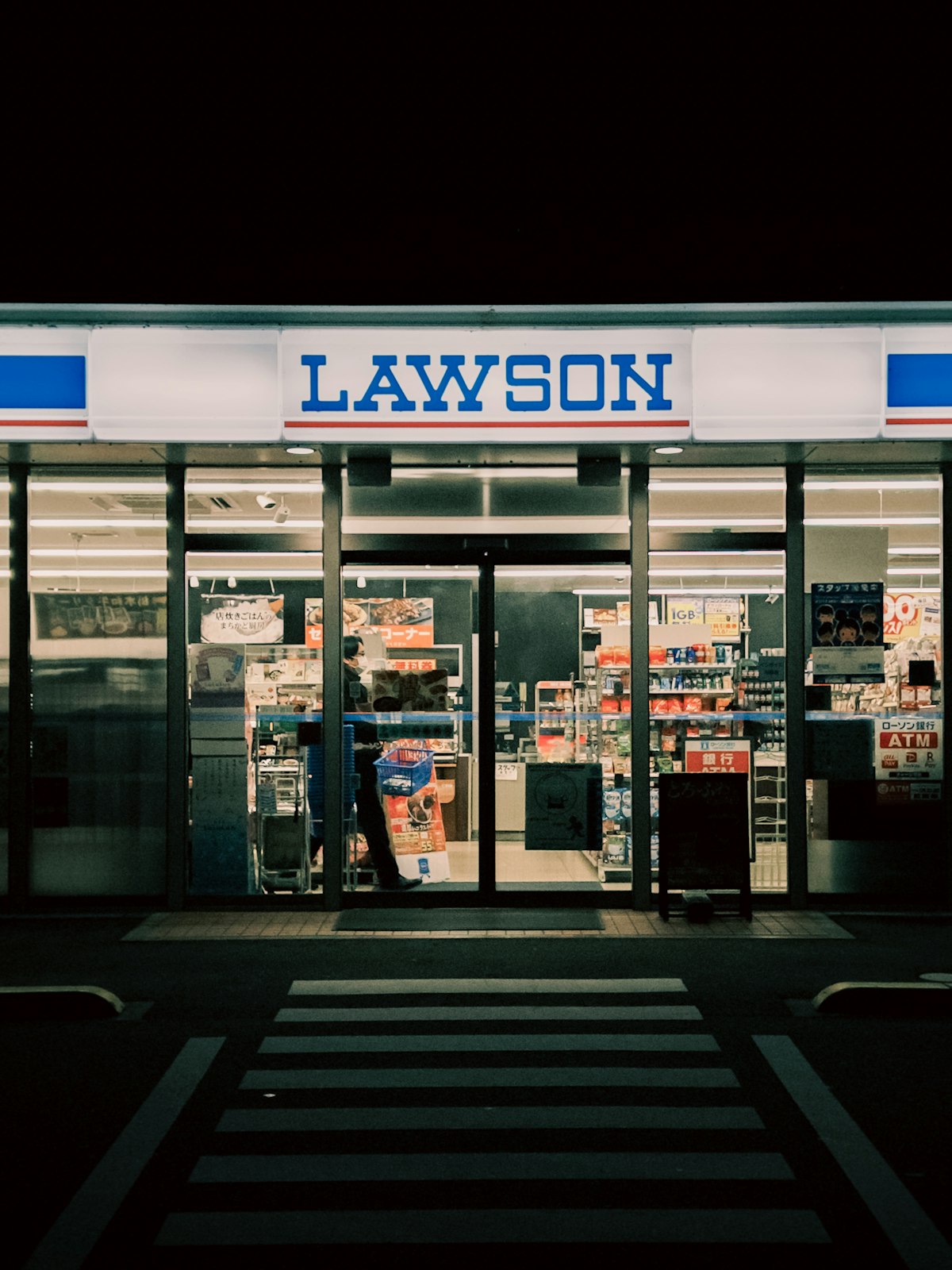
Japanese konbini do more than convenience stores elsewhere. 7-Eleven, FamilyMart and Lawson sell:
- rice balls, bento and sandwiches that are good enough for breakfast every day
- hot coffee and fresh pastries
- basic toiletries and cold medicine
- phone chargers and cables
7-Eleven, Lawson and FamilyMart are all near Kanamachi's two stations, and Maruetsu is open 24 hours if your flight lands late. Find your nearest one on the first evening. With a fridge and a microwave in the room, a konbini breakfast costs a few hundred yen and takes five minutes.
Cash in Tokyo: How Much Yen to Carry
Japan uses cards far more than it did ten years ago, but small restaurants, local shops and coin lockers still often want yen. Many ramen counters sell meal tickets from a machine that takes cash only, and a shotengai greengrocer is unlikely to take a card.
Carry ¥10,000–20,000 for daily use and keep a backup amount separately. Withdraw at a 7-Eleven ATM, which is the most reliable for foreign cards and has an English menu. The Kanamachi guide lists the ATMs and shops near the stations.
Japanese Phrases and Language Tips for First-Timers
You don't need Japanese, but four phrases go a long way:
- Sumimasen (sue-mee-mah-sen): "Excuse me" or "Sorry." Use it to get attention or to squeeze past.
- Arigatou gozaimasu (ah-ree-gah-toh go-zai-mas): "Thank you," the polite form. Say it often.
- Kore o kudasai (koh-reh oh koo-dah-sai): "This one, please." Point and say it.
- Ikura desu ka (ee-koo-rah des kah): "How much is it?"
Outside the tourist areas, English is limited, so prepare a little:
- Screenshot your accommodation address in Japanese to show a taxi driver.
- Install Google Translate and use the camera mode on menus.
- Get comfortable pointing at pictures and plastic food displays.
Tokyo Travel Tips for Staying Outside the Center
Do the far side of the city early. If Shibuya, Shinjuku and Harajuku are on your list, do them in the first half of the trip while your energy is high. Keep the closer east-side sights for later.
Schedule a rest day. On a trip of a week or more, take one day off sightseeing. Sleep in, run the washer-dryer, and walk the neighborhood. A quiet residential street lets you rest in a way a hotel above a Shibuya crossing doesn't.
Explore where you're staying. Shibamata's temple approach is one stop away, and Mizumoto Park, Tokyo's largest waterside park, is a short bus ride. See the Shibamata travel guide and the Mizumoto Park guide. For a full picture of the area, read is Kanamachi good for tourists.
First-Time Tokyo Mistakes to Avoid
Overpacking the itinerary. Four or five major sights a day leads to exhaustion by day three. Plan two or three and leave room for detours.
Ignoring jet lag. On days 1 and 2, expect a slump in the mid-afternoon. Plan something easy, like a park or a café, for that slot.
Sticking to familiar chains. Point at what the people next to you are eating. The worst outcome is one meal you don't love.
Fearing getting lost. You can't get dangerously lost in Tokyo. A train will bring you back from almost anywhere until midnight.
Buying souvenirs on day one. Note what you want and buy near the end, so you aren't carrying it all week.
Before You Leave for Tokyo
Choosing between airports? Our Haneda vs Narita comparison matters more than usual if you're staying in east Tokyo. For step-by-step routes to Kanamachi, see from Haneda and from Narita. For the neighborhood itself, read our Kanamachi neighborhood guide.
Read the booking policy before you book: check-in steps, house rules and cancellation terms are all there. Once you're booked, send me your list of places and I'll tell you which station to change at for each one.
If you'd like a quiet base with direct trains to Ueno, Shibamata and Narita for your first Tokyo trip, see the room and check your dates on the Bon House booking page.
Frequently Asked Questions
Do I need a JR Pass for a Tokyo trip?
Not for Tokyo alone. A 7-day nationwide pass costs ¥50,000 or more, and most rides in the city are a few hundred yen on Suica. A Tokyo–Kyoto round trip by shinkansen costs well under the pass price, so it only pays off if your week includes several long shinkansen journeys.
Should I tip in Tokyo?
No. Tipping isn't part of Japanese culture in restaurants, taxis or hotels, and staff may run after you to return the money. Polite thanks is enough.
Is it safe to stay outside central Tokyo?
Yes. Residential areas like Kanamachi have commuters walking home from the station until the last train, and the main streets are lit. Normal big-city caution covers it. The police number in Japan is 110 and ambulance or fire is 119.
How many days do I need in Tokyo for a first trip?
Three full days cover the main east and west side sights at a comfortable pace. With five to seven days you can add day trips such as Nikko or Kamakura and a rest day. See our day trips from Kanamachi.