
Sensoji Temple Guide: Best Time to Visit, Etiquette and What to Skip
By Atsushi — host at Bon House in Kanamachi, Katsushika ward. I've run Bon House since 2022 and hosted 300+ guest groups.
Sensoji Temple takes about 30 million visitors a year, roughly 80,000 a day, yet at 6:30 on a weekday morning you can stand in front of the main hall with a handful of locals and nobody else. The temple is the same at both hours. What changes is whether you see it or a wall of selfie sticks.
Almost every guest who stays with me puts Sensoji on their list, and my advice is always the same: go at opening time or after dark, and keep the middle of the day for something else. This guide covers when to go, how to get there from Kanamachi, what to do at the main hall, and what I'd skip.
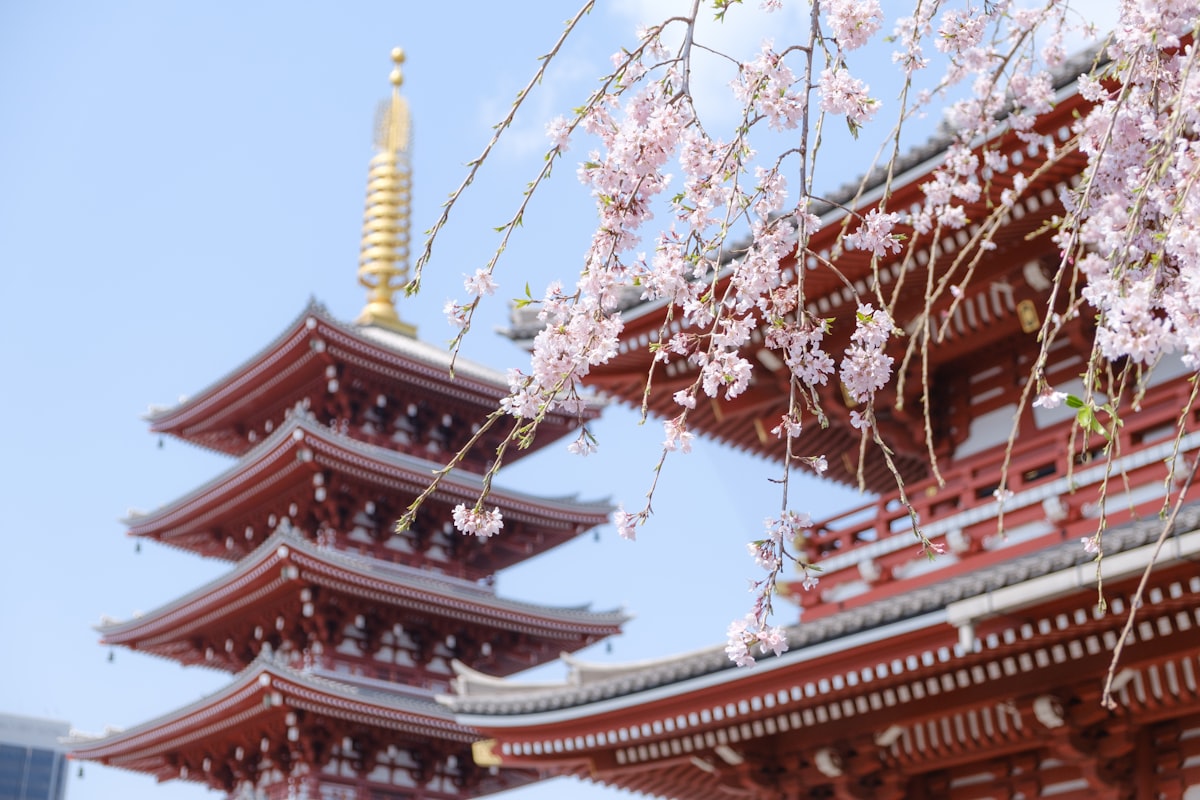
Sensoji Temple at a Glance: Best Time to Visit
| Time | Crowds | What's open |
|---|---|---|
| 6:00–7:30 | Almost empty | Grounds, main hall |
| 7:30–9:00 | Building | Grounds, main hall |
| 9:00–11:00 | Busy | Most Nakamise shops |
| 11:00–15:00 | Peak | Everything |
| After 18:00 | Thin | Grounds, lit until 23:00 |
The grounds never close. The main hall opens at 6:00 from April to September and at 6:30 from October to March, and closes at 17:00 all year. Entry is free.
Getting to Sensoji Temple from Kanamachi
Asakusa is 25–30 minutes from Kanamachi by train, with one change either way.
JR + Tsukuba Express (¥439 by IC card): JR Joban Line from Kanamachi to Kita-Senju (about 9 minutes), then the Tsukuba Express 2 stops to its Asakusa station (5 minutes). This is the most frequent option. TX Asakusa sits on Kokusai-dori, about a 5–10 minute walk west of Kaminarimon Gate.
Keisei via Keisei Takasago (¥377 by IC card): from Keisei Kanamachi, change at Keisei Takasago to a train running through to Asakusa Station on the Toei Asakusa Line, the station nearest Kaminarimon. It's cheaper, but the Keisei Kanamachi Line runs less often, so check the timetable before you leave.
Neither JR East nor Keisei takes contactless credit cards at the gates, so carry a Suica or PASMO.
Coming from the northeast also means you never pass through Shinjuku or Shibuya on the way. For a 6:30 arrival, that matters: you're on a quiet local train while the commuter rush is still building elsewhere.
Bon House is a private tatami guest room for up to four people in a house near Kanamachi Station, with its own bath and toilet, a fridge, microwave and kettle, and a washer-dryer. If you want a quiet base 25–30 minutes from Kaminarimon, check dates and rates for the room here.
Inside Sensoji Temple: Kaminarimon, Nakamise and the Main Hall
Kaminarimon Gate
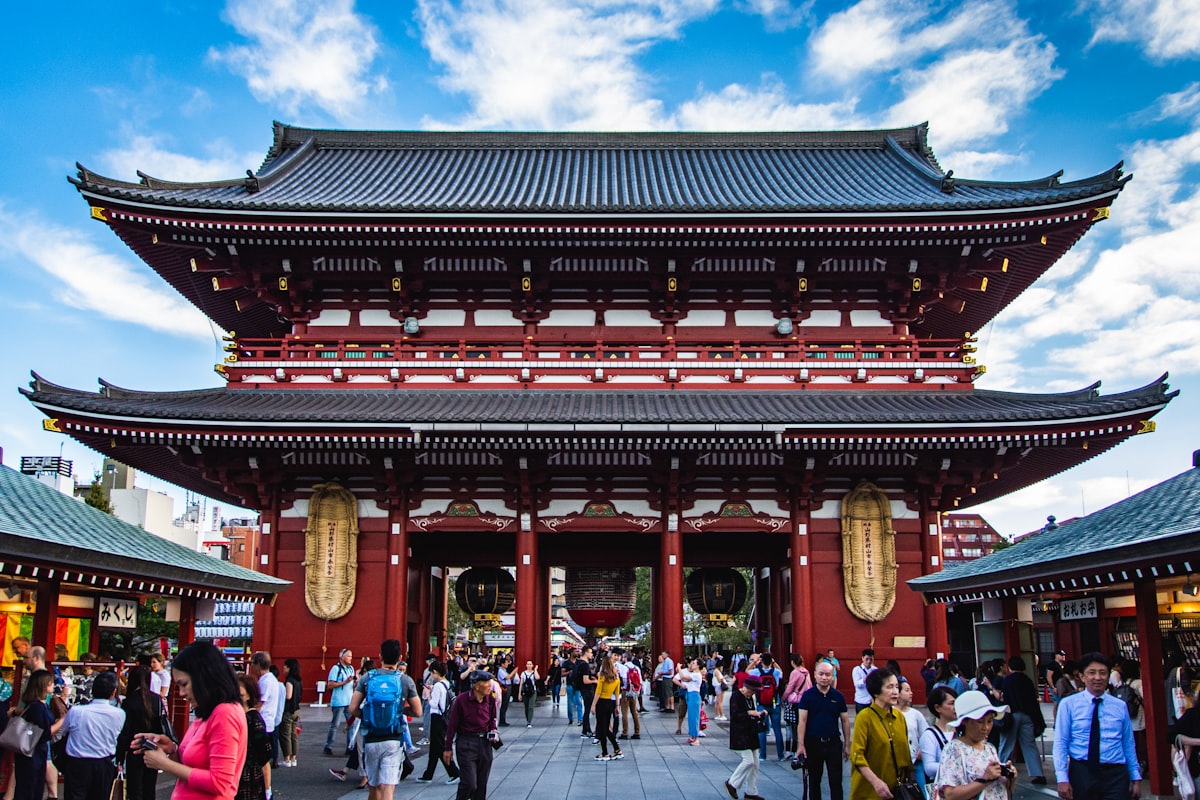
The giant red lantern is the photo everyone wants. It weighs about 700 kg and stands 3.9 meters high. The gate itself burned down in 1865 and stood empty for 95 years, until Konosuke Matsushita, the founder of what is now Panasonic, paid to rebuild it in 1960.
Two statues flank the entrance: Fujin, the wind god, and Raijin, the thunder god. Most people rush past them for the lantern shot. Stop for a minute; the carving is the best detail at the gate.
Nakamise Shopping Street
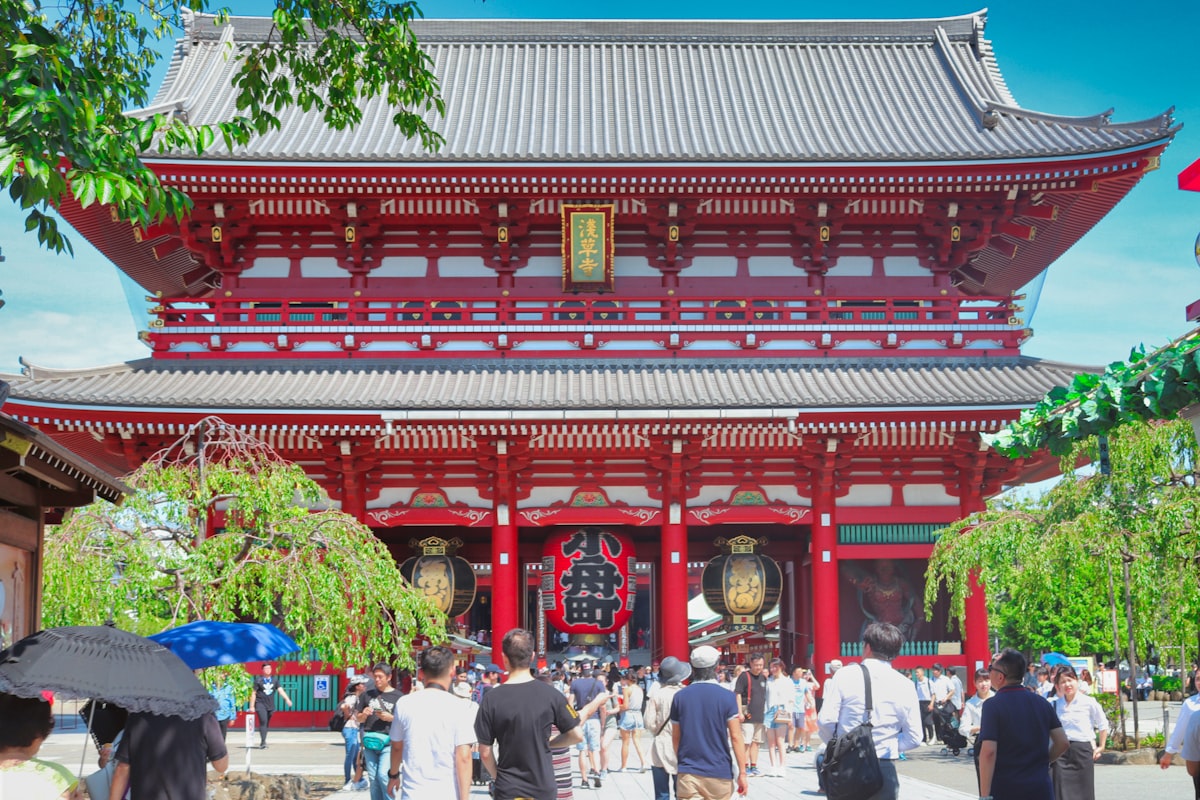
Nakamise-dori runs about 250 meters from Kaminarimon to the inner Hozomon Gate, with close to 90 shops on both sides.
Worth stopping for: - Ningyo-yaki, small sponge cakes filled with red bean paste. Kimuraya Honten, founded in 1868, is the oldest maker in Asakusa. - Kaminari-okoshi, the puffed-rice cracker the area is known for - Hand-painted fans and tenugui (cotton hand towels)
Skip: - Generic "Japanese" souvenirs you can buy in any airport shop - Sit-down restaurants right on the main street. Walk one block off it for better food at lower prices.
Midday, the 250 meters can take 20 minutes to walk. Before 9:00 you can stroll it in five, though most shutters are still down.
The Main Hall and Five-Story Pagoda
Past Hozomon you reach the main hall, dedicated to Kannon, the Buddhist goddess of mercy. Sensoji traces its founding to 628 AD, which makes it the oldest temple in Tokyo, even though the current hall is a postwar rebuild.
In front of it stands a large incense burner. People waft the smoke over themselves because tradition says it heals whatever part of the body it touches.
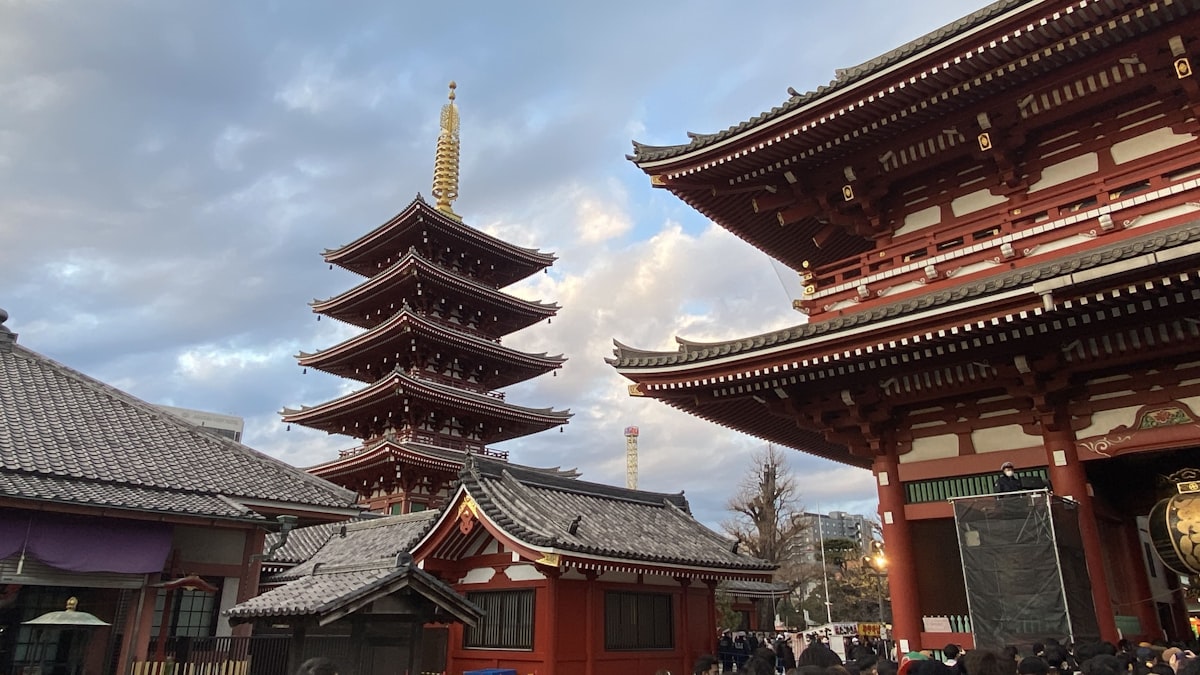
The five-story pagoda to the left of the main hall is at its best in evening light.
How to Pray at Sensoji Temple (No Clapping)
Sensoji is a Buddhist temple, so the routine is different from a Shinto shrine:
- Bow once in front of the hall.
- Drop a coin into the offering box. A 5-yen coin is the traditional choice, because go-en also means "good connection".
- Put your palms together and pray silently.
- Bow once more and step aside.
Don't clap. Clapping belongs at shrines, including Asakusa Shrine next door. You keep your shoes on in the main hall. Photos are fine on the grounds; inside the hall, follow the signs and never photograph people while they pray.
Omikuji fortune slips cost ¥100. Sensoji's set is known for its high share of bad fortunes. If you draw one, tie it to the rack provided and leave the bad luck at the temple.
Best Time to Visit Sensoji Temple: Morning vs Evening
Early Morning, 6:00–9:00
Here is how it usually goes for a couple staying in Kanamachi who want the quiet version. They leave around 6:30, change to the Tsukuba Express at Kita-Senju, and pay ¥439 each by IC card. By about 7:00 they walk under Kaminarimon with almost nobody in the frame. The main hall is already open, the incense burner has a few locals around it, and Nakamise is shuttered and empty. They have the place mostly to themselves until about 8:30. By the time the first ningyo-yaki shops open, around 9:00–10:00, they've seen the temple and are first in line for breakfast snacks. They're gone before the tour buses arrive around 11:00.
That's the version most people never see.
The same dawn approach is the only way to handle Sensoji at New Year, when it takes 2.8 to 3 million visitors over three days. See our Tokyo hatsumode guide.
Evening Illumination, After 18:00
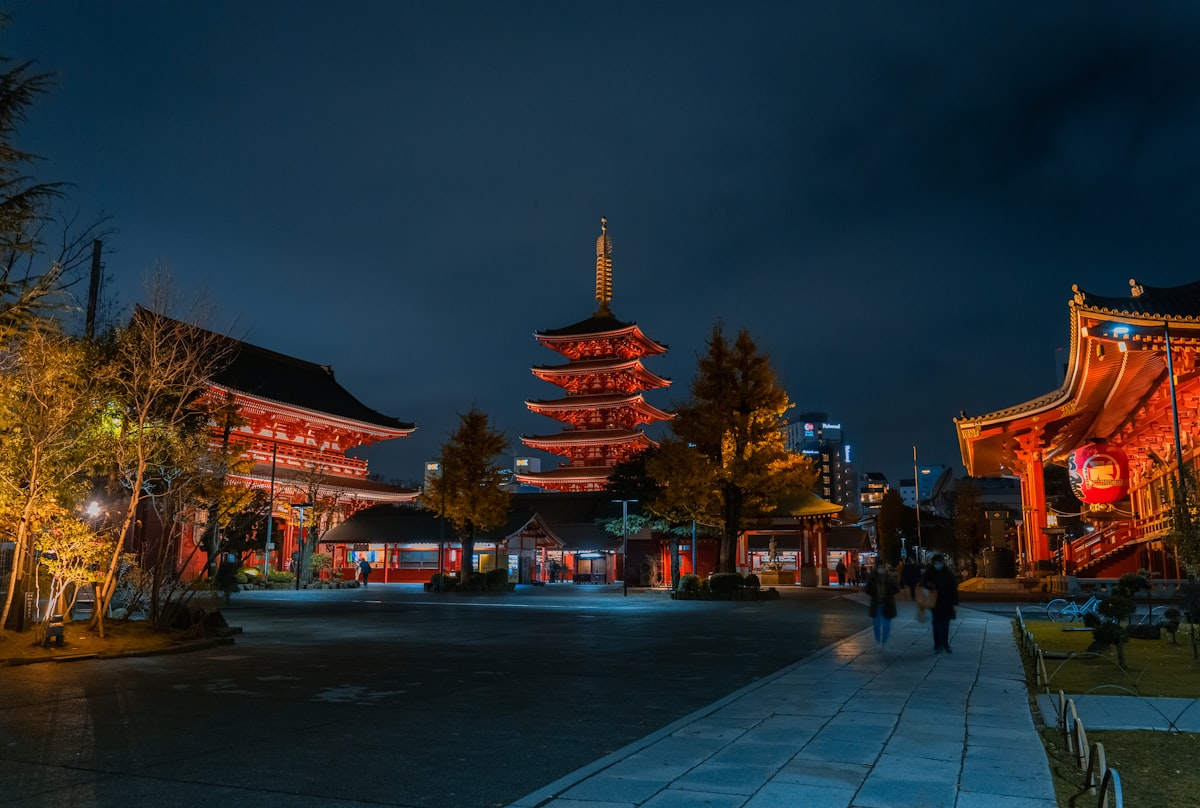
The main buildings are lit from dusk until 23:00. Crowds thin out after about 18:00, once the tour groups leave.
The main hall closes at 17:00, but you can still walk the grounds and see the lit pagoda and gates. Most Nakamise shops pull down their shutters around 19:00.
An evening visit is the one I'd recommend to anyone who can't face a 6:00 alarm. It's quieter, and the orange of the gates against a dark sky looks better in person than in photos.
When to Avoid Sensoji
- Weekends, especially Saturday afternoons
- Holidays: Golden Week (late April to early May), Obon (mid-August) and the first days of January
- Sanja Matsuri (mid-May), unless the festival is the reason you came
- 11:00–15:00 on any day, the peak hours for tour groups
Sensoji Crowds: What to Expect in the Daytime
In daylight hours, Sensoji is crowded almost every day. You will be surrounded by tour groups, selfie sticks and people stopping suddenly to take photos.
That's not a reason to skip it. The architecture, the incense smoke and the age of the place make it worth a visit. Just treat it as a major tourist attraction that happens to be a working temple, not a place for quiet reflection.
If crowds bother you, go at opening time or after dark. Those are the only two windows for a quieter visit.
3-Hour Asakusa Itinerary Around Sensoji Temple
Here's how I'd spend a half-day in the area:
Hour 1: Temple grounds - Photos at Kaminarimon - Walk Nakamise slowly and buy a bag of ningyo-yaki - Pray at the main hall and circle the pagoda
Hour 2: Around the temple - Visit Asakusa Shrine, right beside the main hall and often overlooked - Walk the back streets west of the temple, where the craft shops are - Head down to the Sumida River for the view of Tokyo Skytree
Hour 3: Lunch - Asakusa is known for tempura and soba. Daikokuya Tempura is the famous name for tempura bowls; arrive at its 11:00 opening or expect a long queue. - Or graze on street food: melon pan, taiyaki, age-manju
Extension: Tokyo Skytree. The tower is about a 20-minute walk across the river, or one stop by train. Temple in the morning, lunch in Asakusa, Skytree in the late afternoon for the sunset view makes a solid day. See our Tokyo Skytree guide to decide whether the ticket pays off on your dates, or our Asakusa to Ueno walk if you'd rather head west on foot.
What I'd Skip at Sensoji and Asakusa
Kimono rental in Asakusa: the streets are full of tourists in rental kimono, and walking through midday crowds in one is hard work. If you want the kimono experience, do it somewhere calmer.
Rickshaw rides: they cost several thousand yen for a short loop and cover ground you can easily walk. Take one only if you want the ride for its own sake.
Restaurants on Nakamise itself: covered above. One block off the main street, the food is better and cheaper.
Before You Go: Sensoji Temple Practical Tips
Cash: bring some. Many small shops and food stalls don't take cards. Convenience-store ATMs around Asakusa Station accept foreign cards.
Footwear: you'll be on stone paving all morning. Wear comfortable shoes.
Time needed: 1–2 hours for the temple itself, 3–4 hours if you explore Asakusa properly.
Want the temple without the crowds? Shibamata Taishakuten is one stop from Keisei Kanamachi (2–3 minutes, ¥146 by IC card), with its own approach street of dango shops. My Shibamata travel guide covers it.
Visiting Sensoji Temple from a Base in East Tokyo
Sensoji is worth one visit, at the right hour. Go early or go late, and don't make it your only temple in Japan: smaller temples give you the quiet that Sensoji can't.
If you're staying with us, Sensoji is an easy early-morning trip. Leave Kanamachi around 6:30, arrive by 7:00, and you'll have the place mostly to yourself until about 8:30.
Still deciding where to stay? My guide to where to stay near Asakusa compares hotels by the temple with cheaper bases nearby. If a quiet tatami room 25–30 minutes from Kaminarimon suits your trip, see the Bon House room and book your dates.
For more on getting around from our neighborhood, see my first-time Tokyo travel tips and the day trips guide.
Sensoji Temple FAQ
Is Sensoji Temple free to enter?
Yes. The grounds, Nakamise and the main hall cost nothing. You only pay for optional extras such as omikuji, incense, charms or a goshuin stamp.
Can I get a goshuin stamp at Sensoji?
Yes. Sensoji writes goshuin, the hand-brushed temple seals collected in a stamp book, at its counter on the grounds. Expect around ¥500 and check the posted price. Pray at the main hall first, and go in the morning, because the line grows through the day.
What is the difference between Sensoji and Asakusa Shrine?
Sensoji is a Buddhist temple to Kannon. Asakusa Shrine, beside its main hall, is a Shinto shrine to the three men linked to the temple's founding legend. At the shrine you bow twice, clap twice and bow once; at the temple you don't clap. The shrine runs the Sanja Matsuri in May.