
JLPT or TOEIC for Jobs in Japan? A Job Hunter's Guide to Testing in Tokyo

JLPT or TOEIC for Jobs in Japan? A Job Hunter's Guide to Testing in Tokyo
By Atsushi — host at Bon House in Kanamachi, Katsushika ward. Hosting since 2022, including a steady trickle of guests who come to Tokyo for interviews, exams, or both.
The JLPT runs twice a year, and sign-up in Japan closes about three months before the test. The TOEIC runs about twice a month, closes six weeks ahead, and posts your score 17–18 days after you sit it. If you need a score for jobs in Japan in the next six months, that gap usually decides which test you take.
If you already have N2, take TOEIC next and leave N1 for later. A TOEIC score is about two and a half months away from the day you decide. N1 is at least a year away for most N2 holders.
Next test dates (checked October 2026)
- JLPT: December 6, 2026. Sign-up in Japan closed in September, so the next one you can still enter is the first Sunday of July 2027. Sign-up in Japan for July usually opens in March.
- TOEIC: December 6, 2026 (sign-up closes October 26, score December 23) and February 14, 2027 (sign-up closes January 7, score March 4).
- On December 6, 2026 both tests fall on the same Sunday, so you can't sit both.
- Full schedules: jlpt.jp and the IIBC test schedule.
The rest of this guide covers what each test is good for on a Japanese résumé, and how to set up a two-to-three-week interview trip in Tokyo without wasting days.
JLPT vs TOEIC in Japan: Side-by-Side
| JLPT | TOEIC L&R | |
|---|---|---|
| Proves | Your Japanese | Your English |
| Dates | July & December | About twice a month |
| Sign-up closes | ~3 months before | ~6 weeks before |
| Results | ~2 months | 17–18 days |
| Format | Pass/fail, N5–N1 | Score, 10–990 |
| Fee in Japan | ¥7,500 | ¥7,810 |
| Recruiters check | N2 or above? | 600 / 730 / 860? |
The short version: JLPT gets you into the room. TOEIC is what makes you different from the Japanese candidate sitting next to you.
What JLPT Level Japanese Employers Ask For
For office work in Japanese (sales, engineering, back office, anything with meetings), N2 is the line most job postings draw. "日本語能力試験N2以上" appears so often in listings that recruiters treat it as a filter, not a preference. Below N2, your application often never reaches a person.
N1 helps, but less than people assume. Between N1 and a strong N2 plus clear spoken Japanese in the interview, I'd bet on the second. Interviewers hear your Japanese for 45 minutes; the certificate is one line on a page.
If you're still working toward N2, do at least one full timed run before test day. The listening section at N2 is where most people I've talked to lose their pass, and you won't know your stamina for it until you sit through the whole thing once. We run a sister site, PassJapanese, with free full N2 mock exams in the real format, listening included.
Why a TOEIC Score Matters for Foreign Job Seekers in Japan
Japanese companies have used TOEIC as their English yardstick for decades. Hiring managers know the scale the way you know a GPA, so a TOEIC number on your résumé gets read in seconds. An IELTS band often gets a puzzled look.
For a foreign applicant who already has N2, an English score turns "can work in Japanese" into "can work in Japanese and handle our overseas clients." That's a different salary conversation.
The numbers that show up again and again in Japanese job postings:
- 600: the floor for "uses English sometimes"
- 730: the usual requirement for roles with overseas contact
- 860+: global teams, trading, consulting

Before you pay ¥7,810, take one full 2-hour practice test to see where you stand. Our other sister site, PassTOEIC, has free full-length TOEIC practice tests with a timed real-test mode. If you land above 700 cold, book the real test straight away.
How to Register for the TOEIC in Japan, Step by Step
The whole process runs on the IIBC website (iibc-global.org), and the sign-up form is mostly in Japanese. At N2 you can get through it in about 20 minutes.
- Pick a test date at least six weeks out. Online sign-up closes about six weeks before each test. The IIBC schedule lists every date with its sign-up deadline.
- Create an IIBC member account. You'll need an email address and your name exactly as it appears on your photo ID.
- Enter a Japanese delivery address. The admission ticket (受験票) is mailed about a week before the test. If you don't live here yet, use the address where you'll be staying, and tell your host to expect it.
- Choose your region, then pay ¥7,810. You pick the region (for example, Tokyo), not the exact venue.
- When the admission ticket arrives, look up the venue. The venue is printed on the ticket. Check the train route the same day.
- Attach an ID photo to the ticket. Photo booths outside most Tokyo stations print the right size for about ¥800–1,000.
- On test day, bring the ticket and photo ID. A residence card works; check the IIBC list for what else is accepted. Morning check-in runs 9:25–9:55 and afternoon check-in 14:05–14:35, and the test itself takes two hours.
- Check your score online 17–18 days later.
From the day you decide to the day you have a score is roughly two and a half months. To plan backwards from your first interview: the test has to be at least 18 days before it, and you have to sign up six weeks before the test.
The JLPT also lets you pick only the region. Our guide to taking the JLPT in Tokyo (written in Japanese) covers test-day timing.
Planning a Job-Hunting Trip to Tokyo: Interviews, Tests, Timing
Interviews in Tokyo usually come in rounds: a first interview, sometimes a written or aptitude test (SPI), then a second or final round a week or two later. Fly in for one week and you'll often get through the first round, then have to do the final online. Most of the interview guests we've hosted were asked to come in person for the final.
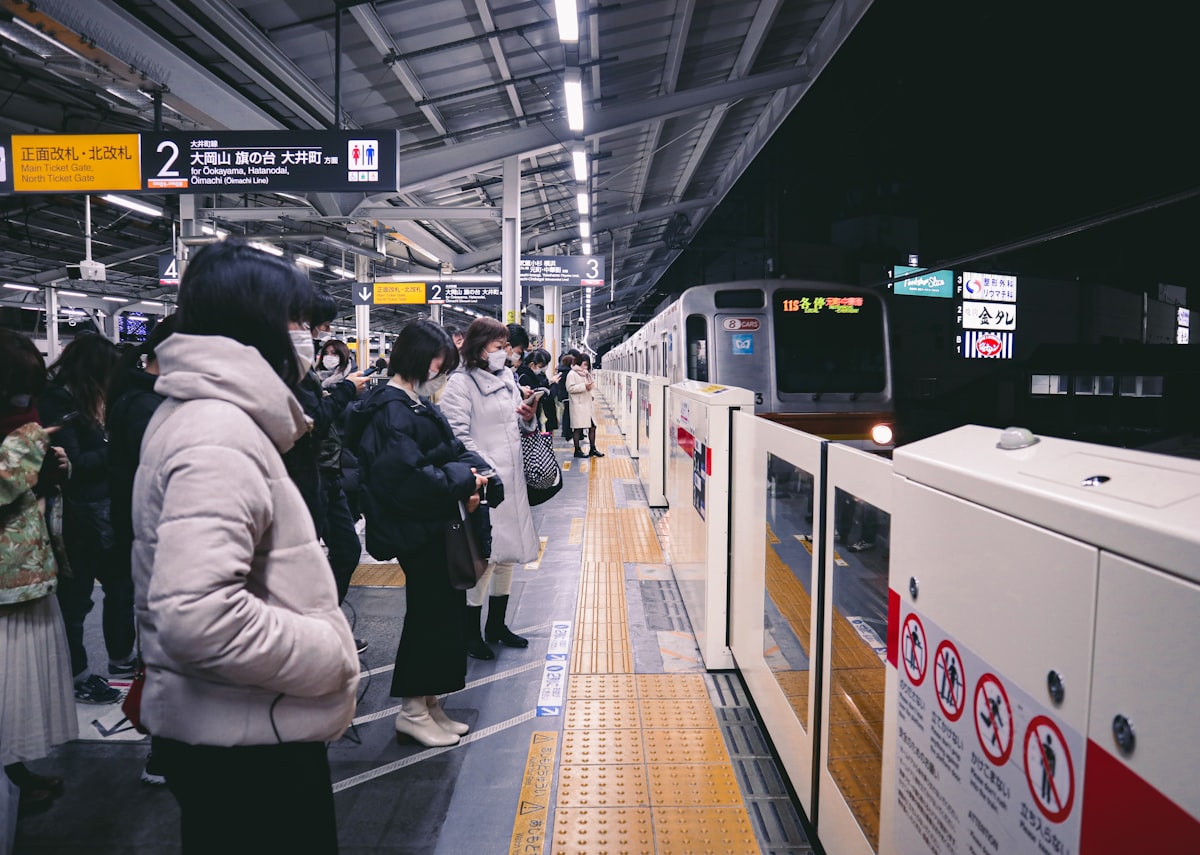
Two to three weeks is the trip length that works. That's long enough for two rounds at several companies, and short enough to stay on a short-term visitor status. Attending interviews is allowed on short-term stay; working isn't. Check whether your nationality needs a visa before you book flights.
A Vietnamese software engineer stayed with us for 17 nights in January 2026. He had N2 from the previous July and a TOEIC of 650 from a test in Hanoi, which he'd left off his résumé because he thought it was too low. In his first three interviews, two interviewers asked about his English before they asked anything about his Japanese.
He added the score to the résumé he sent to his last two companies. One of them, a logistics firm with a Singapore office, made him an offer before he flew home. A 650 isn't impressive by itself. Next to N2, it was the most interesting line on his page.
Where to Stay in Tokyo During Interviews: What Matters
Three things matter more than the neighborhood's name:
- A direct line to the business districts. Most interviews happen in Marunouchi, Otemachi, Shinagawa, Shinjuku, or Shibuya.
- A desk and quiet evenings. You'll rewrite your self-introduction (自己紹介) at least ten times.
- A fridge and somewhere to eat in. Eating out three times a day for three weeks adds up fast in Tokyo.
Kanamachi does well on all three. Most JR Joban Line local trains from Kanamachi run straight onto the Tokyo Metro Chiyoda Line, reaching Otemachi in about 30 minutes with no transfer. You're not navigating Shinjuku Station in a suit at 8:30am.
Evenings here are residential-quiet. Maruetsu and Tokyu Store are both close to the station, and their prepared food gets marked down in the evening, which counts on a job-hunting budget. The Doutor by the north exit works for a last read-through before you leave. The Tokyo University of Science Katsushika campus is an 8-minute walk away, so the area is used to people studying late.
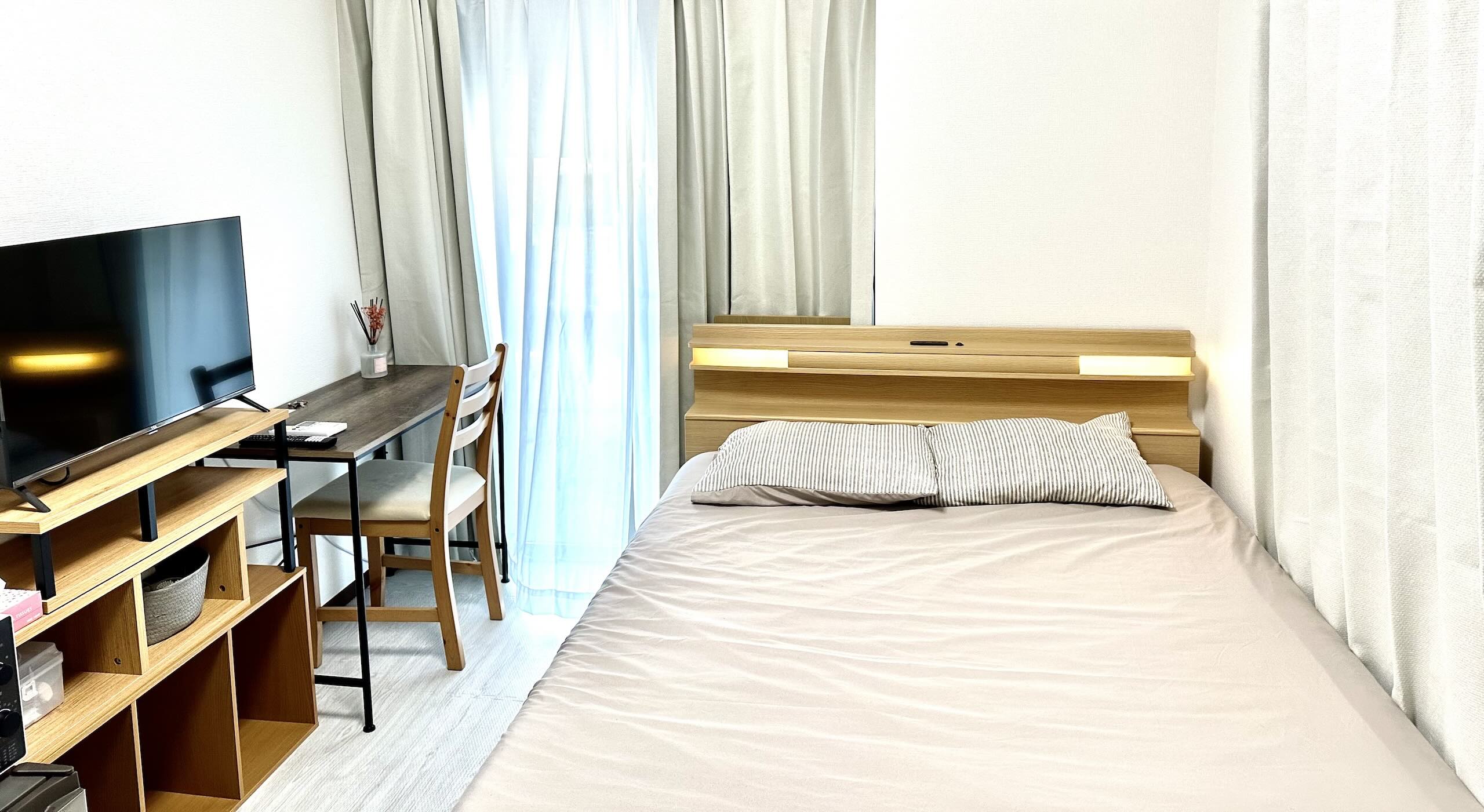
If you're planning interview weeks in Tokyo, our Kanamachi apartment has a desk by the window, a fridge and microwave, and a washer-dryer for your interview shirts. Send your dates and I'll tell you which train to catch for your first interview.
For more on the area, see our Kanamachi neighborhood guide and how Tokyo hotel prices compare in 2026.
Your Next Step, by Where You Are Now
- Below N2: keep studying and enter the next JLPT you still can. Sign-up in Japan closes about three months before each test.
- N2, no English score: book a TOEIC date now, from home or for the start of your Tokyo stay.
- Interviews already lined up: plan a 2–3 week trip so you can attend the final round in person.
Frequently Asked Questions
Is TOEIC required for jobs in Japan?
Not for most jobs open to foreigners. Japanese is the requirement; English is the bonus. It becomes close to required at trading companies, foreign-affiliated firms, and any role with "海外" (overseas) in the description, where postings often set 730 as the minimum.
Is JLPT N3 enough to get a job in Japan?
For factory, hospitality, retail, and care work, often yes. For office jobs in Japanese, rarely. N3 holders who get office offers usually work at companies where the team language is English.
Can I take the TOEIC in Japan on a tourist visa?
Yes, as long as you have accepted photo ID and a Japanese address to receive the admission ticket. Because sign-up closes six weeks ahead and results take 17–18 days, the test has to be booked before you arrive. A two-week trip won't cover both the test and the result.
Does a JLPT certificate expire?
No. A pass has no expiry date. Some employers ask when you passed, though, and an N2 from eight years ago with rusty speaking won't carry an interview.
Last updated: October 2026. Test dates and fees change; confirm on jlpt.jp and iibc-global.org before booking.