
Tokyo Autumn Leaves 2026: 6 Best Spots, Hidden Gems and Peak Dates
By Atsushi — host at Bon House in Kanamachi, Katsushika ward. I've run it since 2022 and hosted more than 300 guest groups.
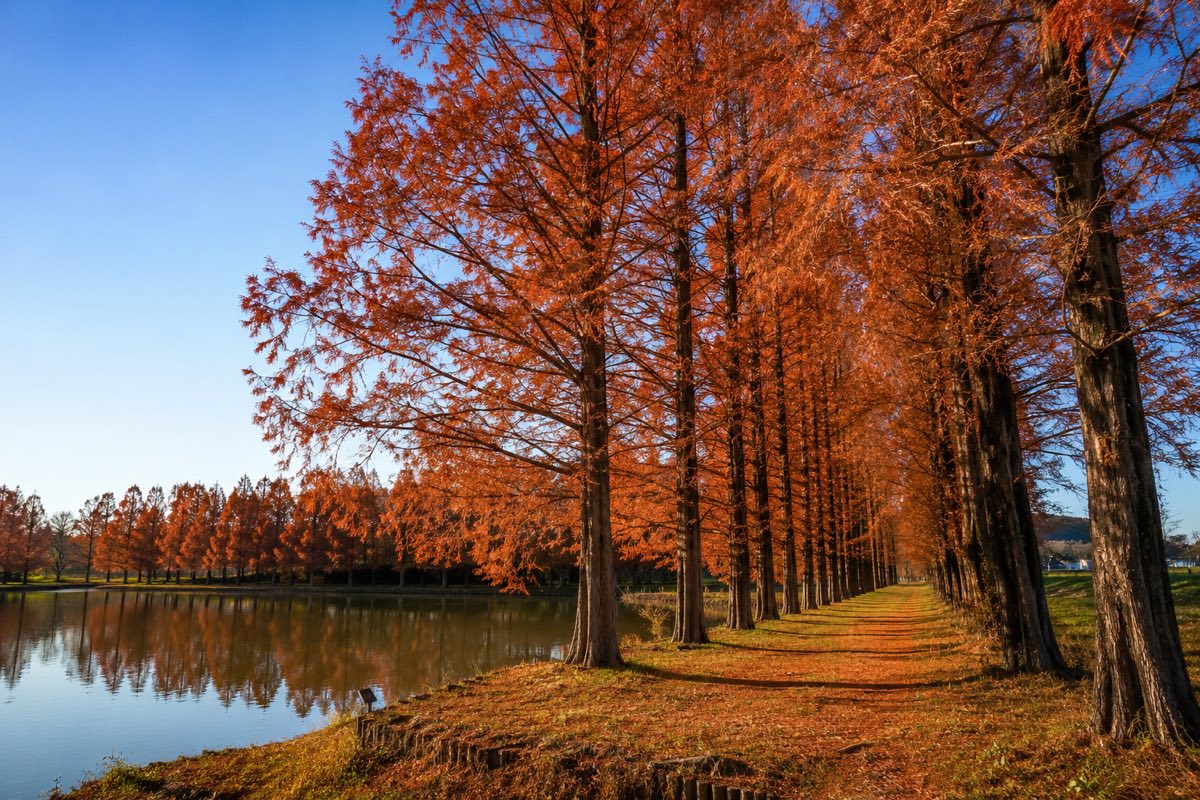
Tokyo autumn leaves peak late: in the last week of November and the first week of December, the maples in the old daimyo gardens, the Jingu Gaien ginkgo avenue and the metasequoias at Mizumoto Park all hit their best at once. Come over the early-November long weekend and the trees in central Tokyo are still green. If I could name only one hidden spot for fall foliage in Tokyo, it would be Mizumoto Park in Katsushika, where a forest of more than 1,500 metasequoias turns brick red once December starts.
I run a guest house called Bon House in Kanamachi, and when an autumn booking comes in, the first thing I check is whether the dates line up with the colours. Tokyo turns later than the classic Kyoto spots, and almost a month later than the Irohazaka road in Nikko (late October to early November). Plan without knowing that Tokyo runs late and you fly home having looked at green trees.
Tokyo Autumn Leaves Calendar 2026: Peak Dates and Crowds
| Spot | Usual peak | From Kanamachi | Crowds |
|---|---|---|---|
| Mizumoto Park, sweetgum | Late Oct – mid Nov | ~20 min by bus | Almost none |
| Mt. Takao | Mid Nov – early Dec | ~1 h 50 min | Very heavy |
| Showa Kinen Park | Mid Nov – early Dec | ~1 h 30 min | Heavy |
| Jingu Gaien ginkgo avenue | Late Nov – early Dec | ~50 min | Very heavy |
| Rikugien | Late Nov – mid Dec | ~35 min | Heavy (worst at night) |
| Koishikawa Korakuen | Late Nov – mid Dec | ~45 min | Moderate |
| Mizumoto Park, metasequoia | Late Nov – mid Dec | ~20 min by bus | Light |
Travel times are approximate and include the walk from the station to the entrance. Peak windows are based on an average year; a warm autumn pushes them back by about a week.
About event dates: as of October 2026, the only 2026 dates announced are the night openings at Rikugien and Koishikawa Korakuen. Every other date below is from 2025, so plan around the peak window and check each venue's official site before you go. On the Japanese-language pages, November is written 11月 and December 12月.
Rikugien Autumn Leaves Illumination 2026: Buy Your Ticket in Advance
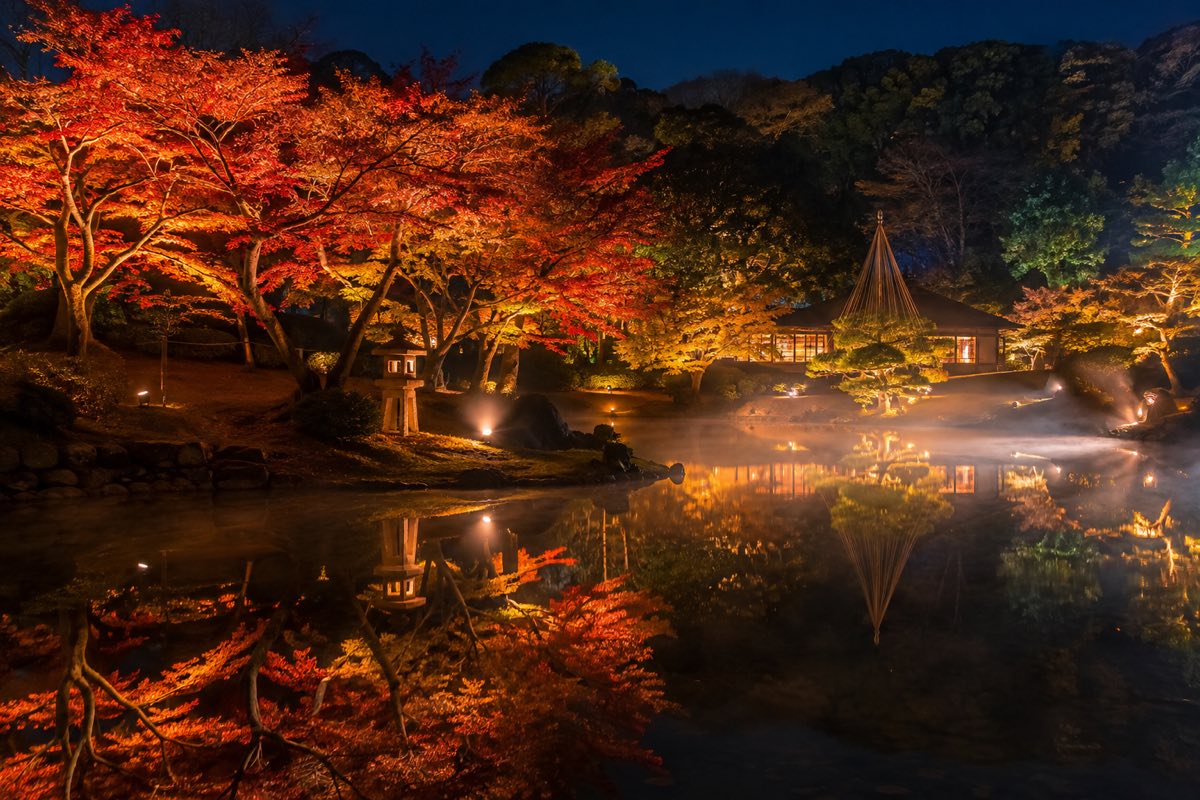
If you only take one photo of Tokyo's autumn leaves, take it at Rikugien in Komagome.
Entry is ¥300 for adults, ¥150 for 65 and over, and free for primary-school age and under. It opens 9:00–17:00 (last entry 16:30).
The maples around the pond turn late, roughly from the last week of November to mid-December, so they hit their best just as the other big spots in the city are fading.
The 2026 night viewing, "Niwa Momiji no Rikugien", runs November 25 to December 6, 18:00–20:30 (last entry 19:30). Tickets are listed at ¥1,000 in advance and ¥1,200 on the day. The garden closes at 17:00 to clear out the day crowd, then reopens with the maples lit up and projections on the walls of the old earthen storehouse.
Buy the advance ticket. Night tickets are capped per day, and same-day tickets are cash only. Queuing at the window on a Saturday night to save the ¥200 difference is a bad bet.
From Kanamachi, take the Joban Line (through-running onto the Chiyoda Line) to Nishi-Nippori and change to the Yamanote Line for Komagome. Under 30 minutes on the train (¥442 IC), then about 7 minutes on foot to the main gate.
Koishikawa Korakuen Fall Foliage: Night Opening Comes Early, Days Are Calmer
Koishikawa Korakuen, right next to Tokyo Dome, charges the same ¥300 adult entry as Rikugien and peaks in the same window, late November to mid-December.
What's different is the timing of the night event. The 2026 special night opening, "Miyama Koyo", runs November 13–24, 18:00–21:00 (last entry 20:00), ¥1,000 in advance and ¥1,200 on the day. It lights up the Engetsu-kyo moon bridge and the roofed Tsukiji-bei earthen wall, but it lands a little before the maples peak. Because there's no night queue in late November, the garden is calmer by day than Rikugien.
If you want to photograph maples without waiting your turn behind a row of tripods, come here. The best of it is around Tsutenkyo, the vermilion bridge.
From Kanamachi, take the Joban Line through onto the Chiyoda Line to Shin-Ochanomizu, walk to Awajicho and ride the Marunouchi Line to Korakuen. About 45 minutes.
Jingu Gaien Ginkgo Avenue: Check the Construction Before You Go
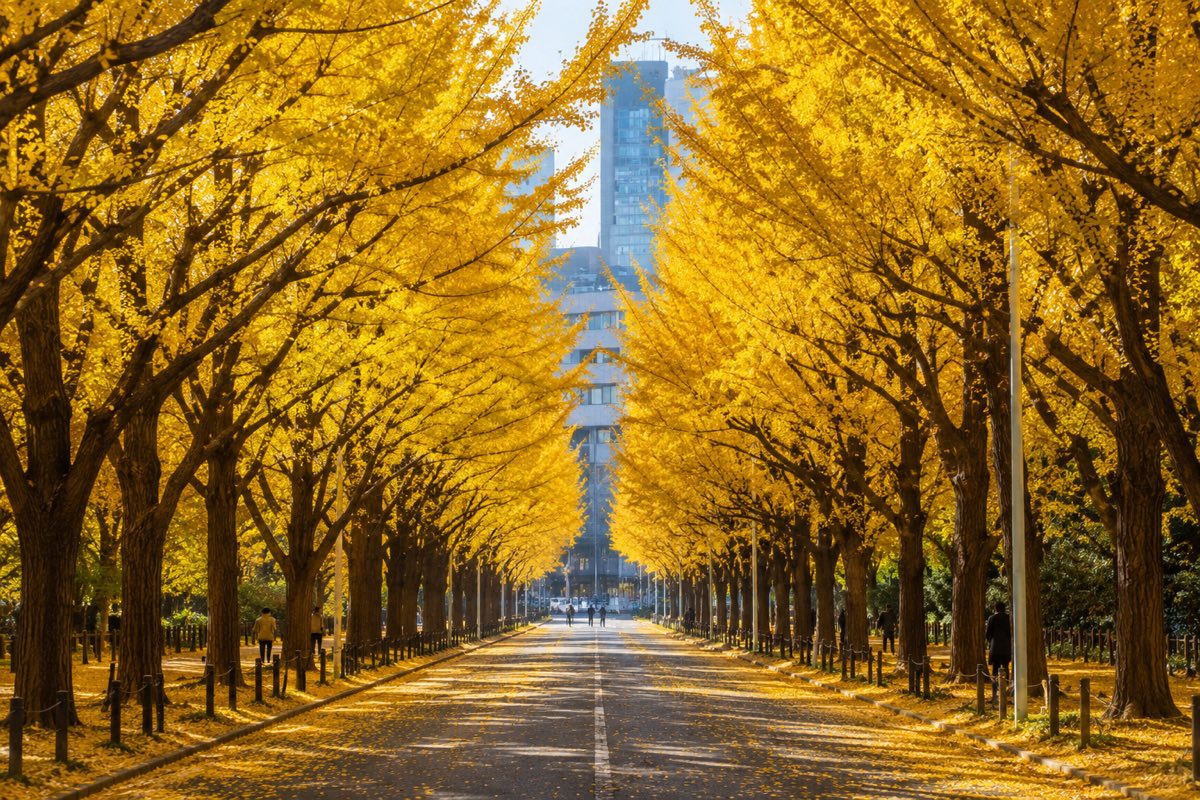
The Gaien ginkgo avenue is the one on every Tokyo autumn poster. The trees start turning in mid-November and go full gold from late November into early December.
Two things to know before you go.
First, the night illumination is short. In 2025 it ran for 9 days, November 22–30. The 2026 dates are not out yet.
Second, redevelopment. Construction is ongoing at Jingu Gaien, and some years bring closures or detours around the Meiji Memorial Picture Gallery. If you're building a day around it, check the Meiji Jingu Gaien notices right before you go.
Go on a weekday morning. On a Saturday afternoon the roughly 300 m avenue becomes a line of tripods and phones.
From Kanamachi, the Joban Line runs straight through to Omotesando with no change, about 40 minutes. Switch to the Ginza Line, get off at Aoyama-itchome, and the avenue starts right there.
Mt. Takao and Showa Kinen Park Autumn Leaves: If You Have a Full Day
Mt. Takao peaks from mid-November to early December. The 2025 Momiji Festival ran October 25 to December 14. The cable car from Kiyotaki to Takaosan station climbs straight through stands of maple, so this is the one season when riding beats walking up. Weekends in late November mean long waits for the cable car; go early on a weekday.
From Kanamachi it's the Yamanote Line from Nishi-Nippori, the Keio Line from Shinjuku, then the Takao Line from Kitano: about 1 hour 50 minutes each way (¥970 IC). It takes the whole day.
Showa Kinen Park in Tachikawa costs ¥450 for adults, ¥210 for 65 and over, and is free for junior-high age and under. Its "Katarai no Icho Namiki" ginkgo row is about 300 m long, flat and wide, so for families with small kids or older travellers I recommend it over Mt. Takao. The 2025 Autumn Leaves Festival ran October 30 to November 30, with the ginkgo row and other areas lit up from 16:30 to 20:30. The Japanese garden at night was a separate ticket.
From Kanamachi to Tachikawa, change at Shin-Matsudo and Nishi-Kokubunji: about 1 hour 30 minutes (¥1,034 IC).
Mizumoto Park Metasequoias: Tokyo's Least Crowded Spot for Autumn Leaves
If I'm spending my own Sunday on autumn colour, this is where I go.
Take a Keisei Bus from Kanamachi Station to the "Mizumoto Koen" stop, then walk 7 minutes. Entry is free, and the bus is the flat 23-ward fare of ¥230. You can also walk it in about 30 minutes from Kanamachi Station's north exit. The forest of more than 1,500 metasequoias turns brick red, and it looks more like North America than Tokyo.
The thing to know: Mizumoto gets autumn twice.
Late October to mid-November: the American sweetgums around Car Park 1 go red first. Autumn arrives here while the rest of the park is still green.
Late November to mid-December: the metasequoia forest colours up, peaking around the first week of December. This is the main event.
That second wave is what makes it work. It arrives after the Mt. Takao crowds have gone home, and the colour is still there after the foliage-tracking sites have moved on to the central gardens. On a weekday morning in December you can walk the avenue end to end and pass only a handful of people.
Bring something to drink. There's little food for sale in the park, and on a cold morning the vending machines are all you've got.
Seeing Tokyo's Autumn Leaves in Late November: A Sample Stay from Kanamachi
Here's how it would go for a couple landing at Narita around midday on Saturday, November 28, staying 5 nights in Kanamachi.
From Narita Airport, take the Keisei Line to Keisei Takasago and change to the Kanamachi Line for Keisei Kanamachi: 55–70 minutes. Drop the bags and rest that first night. On Sunday the 29th, go to the Rikugien night viewing, with tickets bought before leaving home. It falls right inside the 2026 run (November 25 to December 6).
On Tuesday, December 1, take the morning bus to Mizumoto Park and walk the metasequoia forest on a weekday with none of the weekend crowd. For lunch, ride one stop, 2–3 minutes (¥146 IC), from Keisei Kanamachi to Shibamata for kusa dango and a look at the Taishakuten temple garden, and you're back at the room by mid-afternoon.
Put the crowded central spots on weekend evenings and the local hidden spot on a weekday morning. Late November to early December isn't the leftover end of the season; for Tokyo's autumn leaves, it's the main show.
Staying on Tokyo's east side makes this plan easy to run. Bon House is a private tatami room inside a detached house, 7–10 minutes on foot from Keisei Kanamachi Station, with 4 futons, your own bath and toilet, and a washer-dryer. There's no kitchen; you get a fridge, microwave and electric kettle. Mizumoto Park is about 20 minutes by bus and Rikugien under 30 minutes by train. You can check autumn availability and rates on the Bon House room page.
For getting in from the airport, see how to get from Narita Airport to Kanamachi, and for Shibamata, the Shibamata travel guide.
What to Wear for Tokyo's Autumn Leaves Illuminations in Late November
Late November in Tokyo means highs around 15°C, with some mornings and evenings dropping below 8°C. The daytime is fine; the night illuminations are what get you. An hour standing still in a garden is nothing like the same hour walking around in the afternoon.
- A layer under your jacket, not just the jacket
- Shoes you can stand in on gravel for 2 hours
- Gloves if you're shooting at night
- A folding umbrella is enough. December is when Tokyo enters its driest stretch of the year
If the trains themselves worry you, read the guide to riding Tokyo trains and which Tokyo train apps to use.
A 2-Day Tokyo Fall Foliage Plan from Kanamachi
Day 1: the central gardens. Rikugien in the afternoon, dinner in Komagome or back in Kanamachi, then the night viewing if your dates fit. If they don't, swap in Koishikawa Korakuen and Tokyo Dome City.
Day 2: the local hidden spot, at an easy pace. Bus to Mizumoto Park in the morning, back to Kanamachi, then the Keisei Line to Shibamata for lunch. Kusa dango, the Taishakuten garden, and you're home by the afternoon.
Day 2 costs about ¥750 in buses and Keisei fares, round trip. It's usually the day people remember.
For more day trips around Tokyo, see day trips from Kanamachi. If you haven't booked a place for leaf season yet, look at Bon House availability and rates first; it makes it easier to pick your Rikugien ticket date.
Tokyo Autumn Leaves FAQ
Kyoto or Tokyo for autumn leaves?
Kyoto in mid-November, Tokyo from November 25 on. Tokyo's gardens and ginkgo avenue come into peak just as Kyoto's classic spots are fading. Squeeze both into one trip in mid-November and you'll likely see green trees on the Tokyo leg.
Can you still see fall foliage in Tokyo in mid-December?
Yes. The maples at Rikugien and Koishikawa Korakuen and the Mizumoto Park metasequoias usually hold until mid-December. The Jingu Gaien ginkgos start dropping after the first week of December, so in mid-December put the gardens first.
Where can I check the latest foliage updates?
The Tokyo Metropolitan Park Association posts colour updates for the metropolitan gardens and parks on its official site and social media. Foliage sites such as Weathernews also publish peak forecasts from around September each year. One check 2–3 days before you leave is enough.
Last updated: October 2026. Peak windows are based on average-year data and 2025 results. The Rikugien and Koishikawa Korakuen night openings use the announced 2026 dates; all other event dates are from 2025, so check each venue's official site before you go.